AI-Driven SEO
SEO led by strategists and sped up by AI, from keyword research and content planning to technical audits, built to grow organic revenue for online stores.

The Approach
AI does the work a manual process cannot keep up with: reading large keyword and analytics datasets, finding the search intent gaps competitors leave open, running technical audits continuously and flagging where a conversion path leaks. None of it is used to mass-produce content.
I learned SEO in 1998 by getting my own online stores to rank. The fundamentals have changed less than the industry likes to admit: be the clearest, most trustworthy answer to what a buyer is looking for. What changed is the scale of the data and who is reading it.
Search engines are now joined by AI assistants such as ChatGPT and Google AI Overviews, which read structured data and cite sources instead of listing ten links. A store has to be readable by both, and that is the work.
What It Covers
Keyword & Intent Research
Finding the searches that matter across the whole catalog, not just the bestsellers, and the gaps competitors leave open.
Technical Audits
Automated, recurring audits that surface crawl, speed, indexing and template problems before they cost traffic.
Content Strategy
Category, product and editorial pages planned around search intent, written by people and checked against what buyers actually ask.
AI Visibility
Making a site easy for search engines and AI assistants to understand, trust and cite.
Structured Data
Product, review, organization and FAQ markup that agrees with itself across every page and app on the store.
Revenue Reporting
Organic revenue, conversions and qualified traffic, with AI referrals measured instead of buried in Direct.
How The Work Runs
AI Reads Everything, Every Week
A strategist can review a few hundred pages carefully. A store with thousands of products needs something that never gets tired. The AI layer reads the full catalog, the search console data and the crawl every week.
It catches the change that quietly broke four hundred product pages, the category that started losing impressions, and the competitor that just took a position you used to own. Then it ranks the list of fixes by what each is likely to earn.

People Decide What Matters
Data does not know your margins, your best customers or which product line you are about to discontinue. Strategists do. Every recommendation the machine produces is reviewed by a person who understands the business before anything changes on the site.
That split is the whole point. If an "AI SEO" offer cannot tell you exactly what the AI does and what people do, that is your answer. I wrote more about this in how we run AI-driven eCommerce SEO.

Results That Hold Up
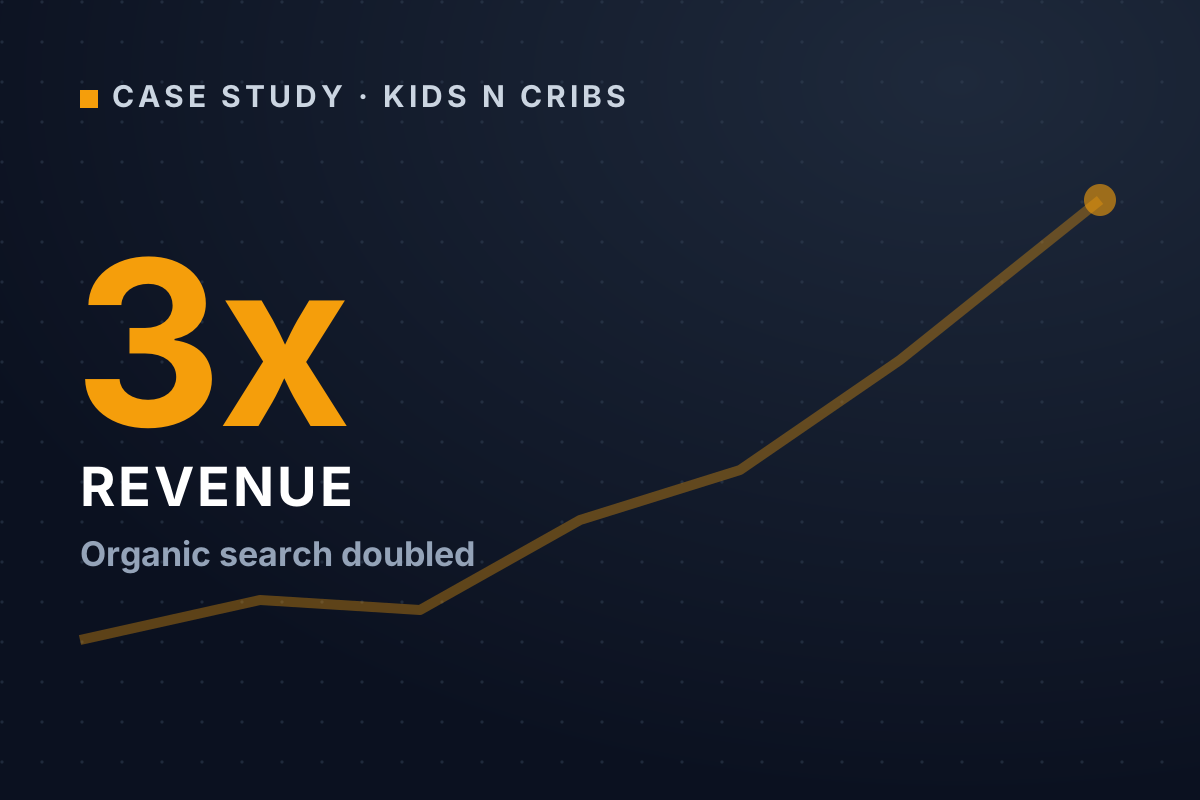
When COVID closed the Kids N Cribs showroom, an SEO campaign doubled organic search and tripled revenue. Read the case study.
For BigBattery, average keyword position halved in under a year, with time on site up nearly 70%. Read the case study. And for MCS Gearup, shut out of paid ads, SEO lifted overall traffic more than 50% and blog traffic more than 260%. Read the case study.
Built For The Answer, Not Just The Ranking
When an assistant recommends a product, it reads your data: what it is, who makes it, what it costs, whether it is in stock. If two apps on your store describe the same product with different prices, the assistant does not pick one. It cites a competitor whose data agrees with itself.
So the work includes clean, consistent structured data, clear answers on the pages buyers ask about, and a site that is easy to cite. Here are the structured data mistakes we find most often.

How An SEO Engagement Runs
The order matters. Fixing content on a site search engines cannot crawl properly is wasted money.
- Step 1
Audit
A full technical, content and competitor audit, plus a baseline of organic revenue so progress is measured against something real.
- Step 2
Prioritize
Every fix ranked by likely revenue impact and effort. The first month goes to what moves the needle, not what is easiest to report.
- Step 3
Fix & Publish
Technical repairs, structured data, and new and improved pages, shipped on a steady schedule rather than in one big batch.
- Step 4
Measure
Monthly reporting on organic revenue, conversions and AI referrals, and the next round of priorities based on what the data shows.
Common Questions
Is AI-driven SEO just AI-written content?
How long does SEO take to show results?
Does this help my store show up in ChatGPT and Google AI Overviews?
Which platforms do you do SEO on?
How do you measure success?
Related Expertise
Ready To Scale?
Whether you need an enterprise eCommerce overhaul or a managed AI website for your business, let's build something that drives revenue.